


What IPW 2025 Reveals About Convention Impact
Every year, U.S Travel Association’s IPW event draws thousands of travel industry professionals to a new host city. Behind the buzzing booths, productive meetings, and strategic conversations, there's a real economic story unfolding across the destination.
For IPW 2025 in Chicago, Zartico analyzed attendee behavior and spending patterns to understand how convention attendance translates into real economic activity. The findings offer a useful model for any destination hosting a major convention.
A National and International Draw
IPW 2025 drew more than 5,000 delegates to the McCormick Place Convention Center in Chicago. Attendees came from 42 states and 70+ countries, with Florida sending the highest share of domestic visitors. International representation was strong, with notable attendance from Canada, Mexico, the UK, and Germany.
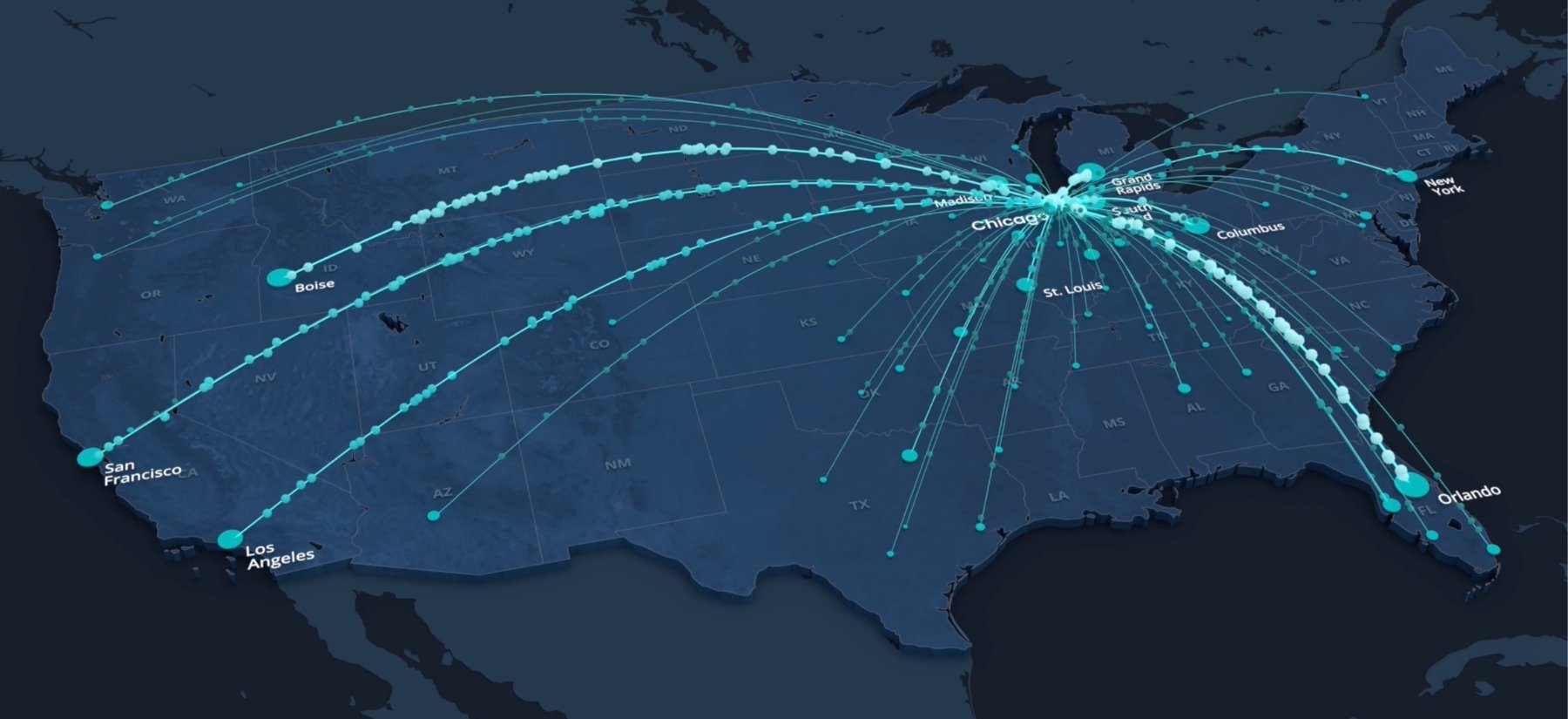 IPW draws attendees from every corner of the country and well beyond.
Understanding who showed up is the first step. The more interesting question is what they did once they arrived.
Where Attendees Stayed
Attendees stayed at a mix of hotels ranging various service and price levels with close proximity to the convention center and to key city attractions. 75% of attendees staying overnight stayed within the official room block. The Hyatt Regency McCormick Place saw the highest share of cross-visitation among all hotels.
Hotels outside the block still saw meaningful activity. Properties like The Wit Hotel and Park Millennium saw strong amenity use, suggesting that delegates who ventured further downtown were still engaged with the city.
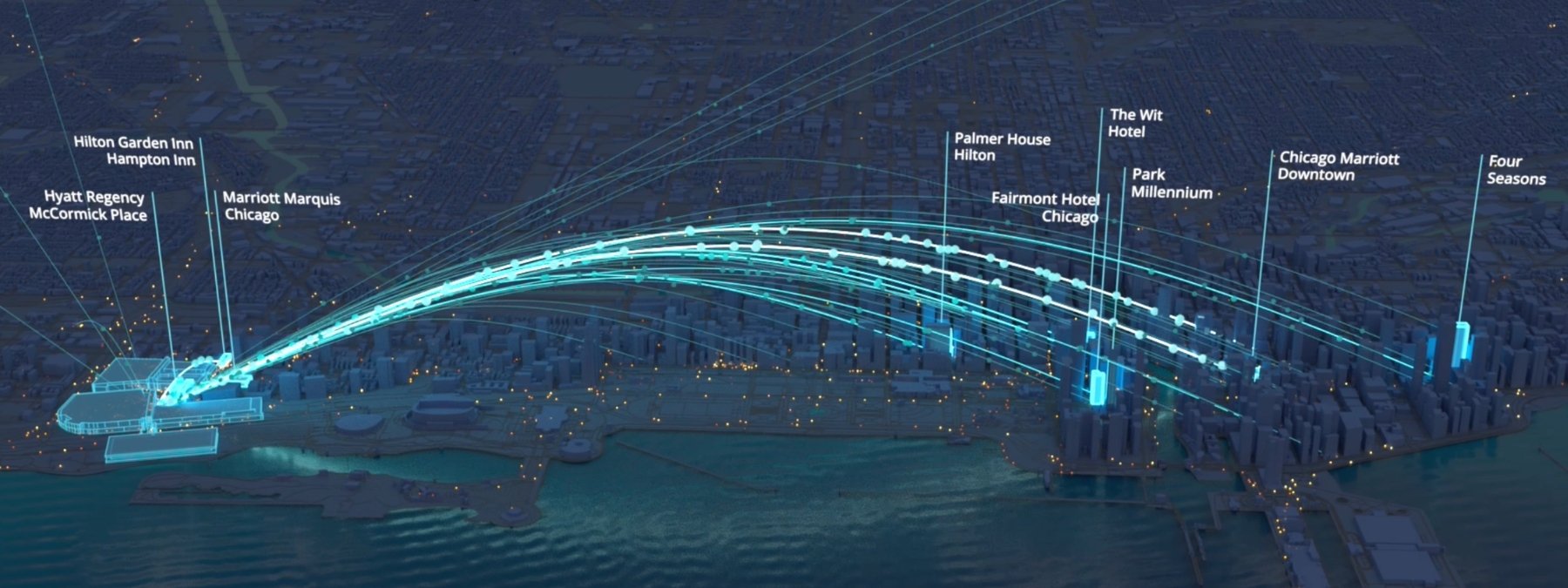 Attendees spread across the city, with most staying close to McCormick Place.
The Hotel Restaurant Effect
One of the clearest signals in the data: host hotel restaurants and bars saw a 20% increase in spending during the event period, with average transaction amounts rising by $14.
This is a pattern worth designing around. When delegates are in town for meeting-heavy days, hotel dining becomes the default. Activating lobby bars and hotel restaurants around official conference events is a high-return, low-friction opportunity for host properties.
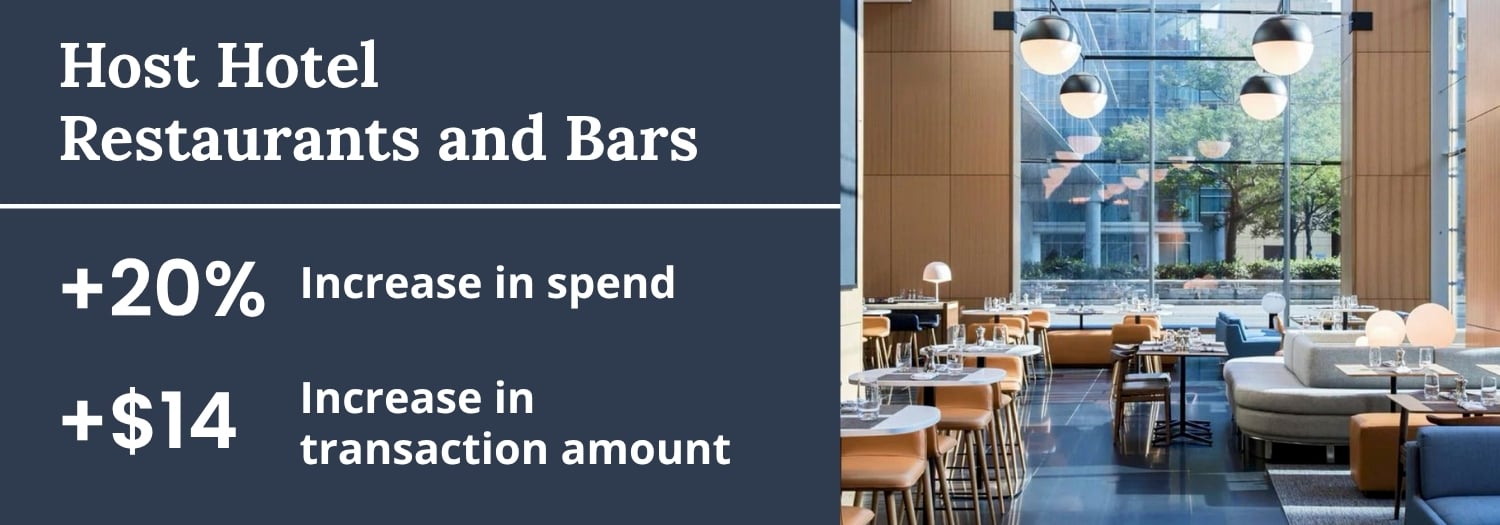 Host hotel drinks and dining felt the convention effect.
How Attendees Moved Through the City
More than 75% of cross-visitation observations were concentrated in Downtown Chicago and Chinatown. Attendees largely stayed close to the convention center and their hotels.
The top visited places were The Field Museum, which hosted the opening night event and drew 14% of attendees, and Navy Pier, the closing event venue, which drew 13%.
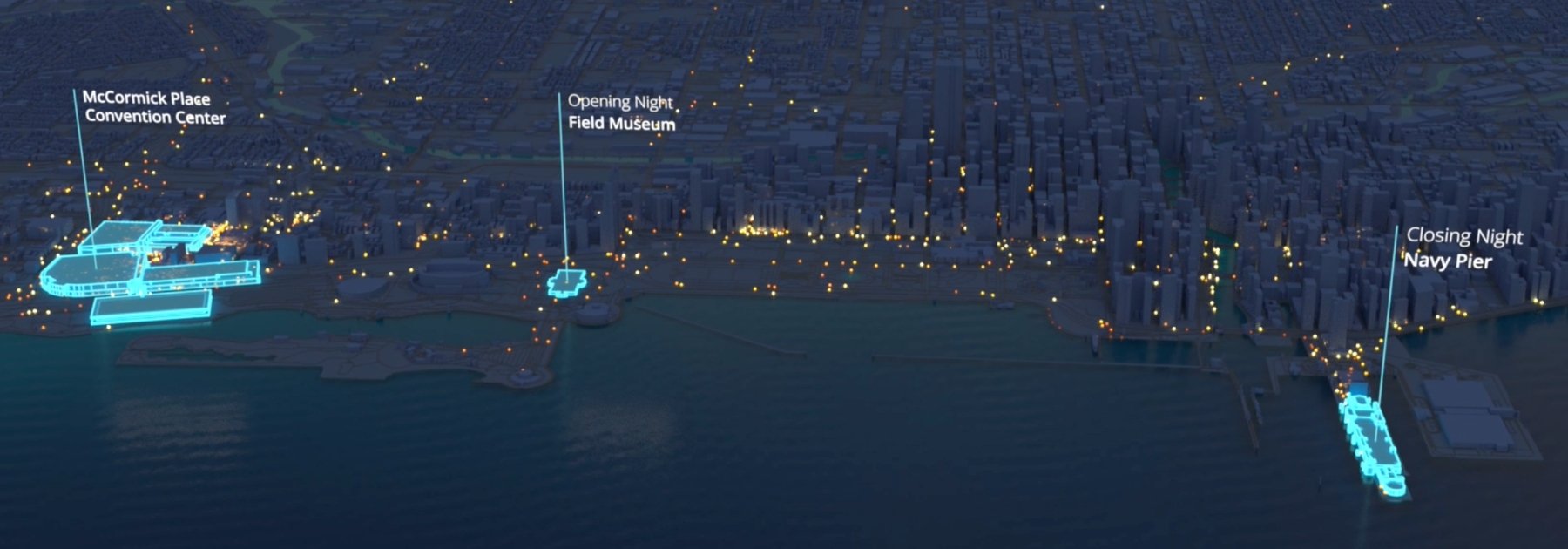 Offsite events extended the economic footprint.
Cultural venues like The Art Institute of Chicago and the Museum of Science and Industry also drew significant attendance. 16% of delegates visited a sports-related venue during their stay, with Wrigley Field drawing 9%.
Even with a packed conference schedule, delegates found time to explore the city.
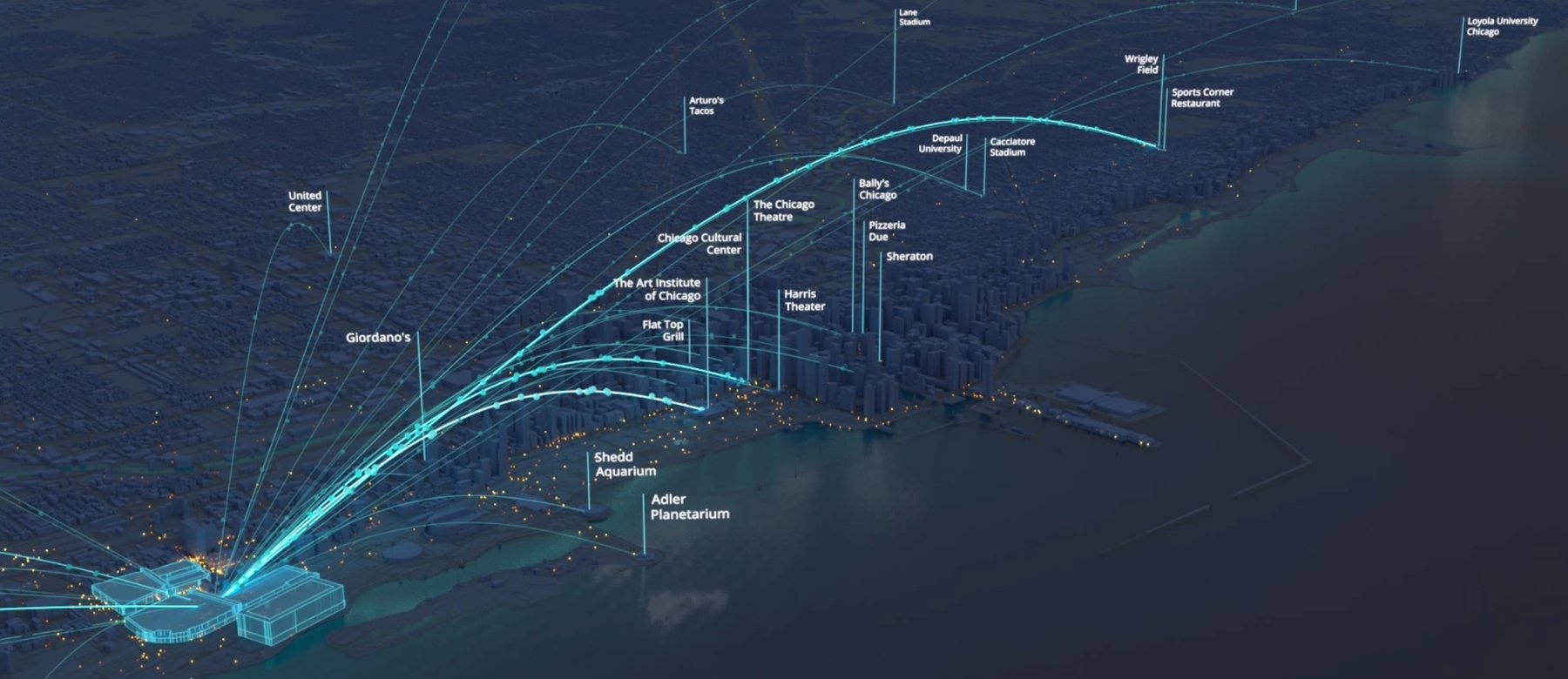 Delegates visited many places throughout the city.
Spending Patterns
48% of attendee spending went to local businesses, with restaurants capturing the largest share. Restaurant spend increased 2% during the event period, while attraction spend dipped 3%.
Those numbers reflect Chicago's reality as a high-density convention market with year-round convention traffic. The same event in a smaller destination would likely produce a larger measurable lift, because there's less baseline noise to absorb it.
Food and beverage is consistently the most reliable signal of economic activation during conventions. Restaurants near convention centers absorb delegate spending in ways that other categories simply don't.
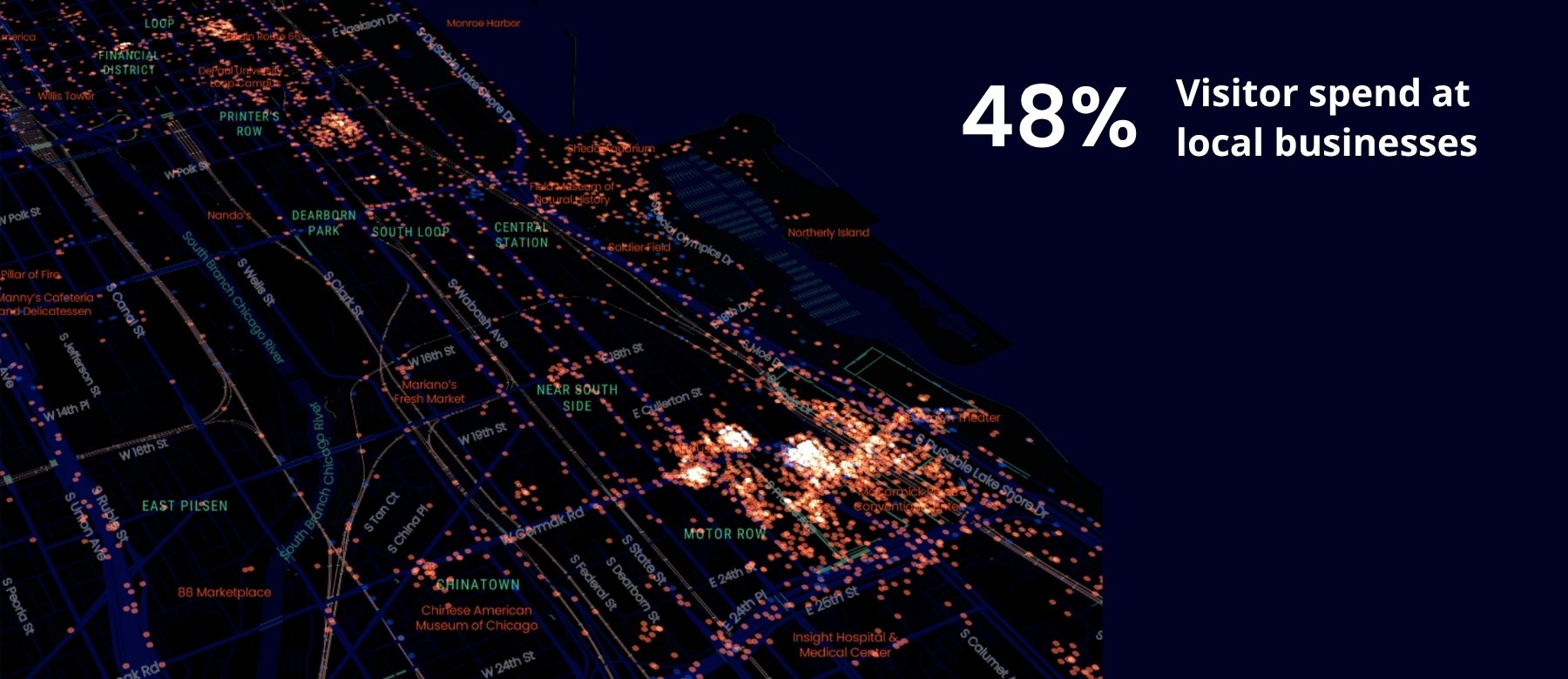 Nearly half of all attendee spending went to local businesses.
How Chicago Compares
Zartico modeled estimated per-visitor direct impact spending* across recent IPW host cities from the prior 3 years. Chicago ranked highest, with an estimated $1,974 impact per visitor and roughly $9.9 million in direct local economic impact. Fort Lauderdale, the 2026 host, is projected to lead at $2,094 impact per visitor, driven in part by a more concentrated hotel market.
Downtown hotel room inventory, destination cost structure, and local business density all shape how convention spending flows. Cities with smaller hotel footprints and higher cost-per-transaction environments tend to generate stronger per-visitor numbers.
What This Means for Convention Host Cities
The IPW Chicago analysis points to a few consistent patterns that any convention host destination can apply.
Proximity drives activity. Attendees don't wander far. Restaurants, bars, and experiences within walking distance of the convention site and host hotels will capture the bulk of visitor spending.
Off-site events create secondary impact. The Field Museum and Navy Pier activations pulled attendees into different parts of the city. Strategically designed off-site events, especially those near walkable dining and nightlife, generate economic activity beyond the convention footprint.
Local businesses benefit most when they're ready. IPW drove traffic to locally owned restaurants across the city. The destinations that capture the most value from events like this are the ones that have prepared their hospitality ecosystem to receive it.
Major conventions generate real economic impact. The data from IPW 2025 shows that impact is concentrated, predictable, and plannable. The question for every future host city isn't whether the delegates will spend. It's whether the destination is designed to capture it.
Watch the full analysis video:
* Comparisons based on representative avg. visitor spending transactions observed in Zartico spend data June 2025. Calculations based on conference schedule; 5 nights accommodations, 5 breakfast, 1 lunch & 4 dinner. Estimates assume 5,000 visitors for each conference.
Want to see how these patterns play out at a larger scale? We studied 94 mega-event matches to understand what actually drives economic lift when the crowds are much bigger. Read the blog here.