


International Focus - Topline Numbers Don't Tell the Complete Story
International Focus
International visitation to the United States looks fundamentally different than it did a year ago. For the first time in over two decades (outside of the pandemic), Mexico has surpassed Canada as the top source of inbound travelers—a shift that signals more than just changing numbers. It reflects evolving travel patterns, economic pressures, and geopolitical realities that destinations across the country are navigating in real time.
Mexico Takes the Top Spot
Through August 2025, I-94 arrival data shows Mexican visitation up 11% year-over-year, while Canadian arrivals have contracted by 21%. The gap is significant: what was once a reliable Canadian lead has become a substantial deficit.
This matters because Canadian and Mexican travelers together account for roughly half of all international visitors to the US. When one of those markets shifts dramatically, the ripple effects reach destinations nationwide—though not evenly, as we'll explore below.
Is Canada Starting to Rebound?
Government visitation figures lag by several months, so we turned to lodging data from KeyData to get a more current read on Canadian travel trends.
The picture is cautiously optimistic. After months of steep year-over-year declines, the trend line is beginning to flatten and inch toward recovery. But "stabilizing" isn't the same as "recovered"—there's still a long way to go before Canadian visitation returns to pre-2025 levels.
.png?width=825&height=408&name=Canadian%20YOY%20Growth%20in%20Hotel%20Guest%20Check-Ins%20(1).png) For destinations with significant Canadian reliance, this is worth watching closely. The worst of the decline may be behind us, but planning for a slow recovery rather than a quick snapback is the prudent approach.
For destinations with significant Canadian reliance, this is worth watching closely. The worst of the decline may be behind us, but planning for a slow recovery rather than a quick snapback is the prudent approach.
International Visitor Behavior
National statistics alone don't tell the full story. International visitation has strong regional variances—if you're a destination in upstate New York or Michigan, an increase in visitors from Mexico or Japan doesn't offset a loss of Canadian travelers.
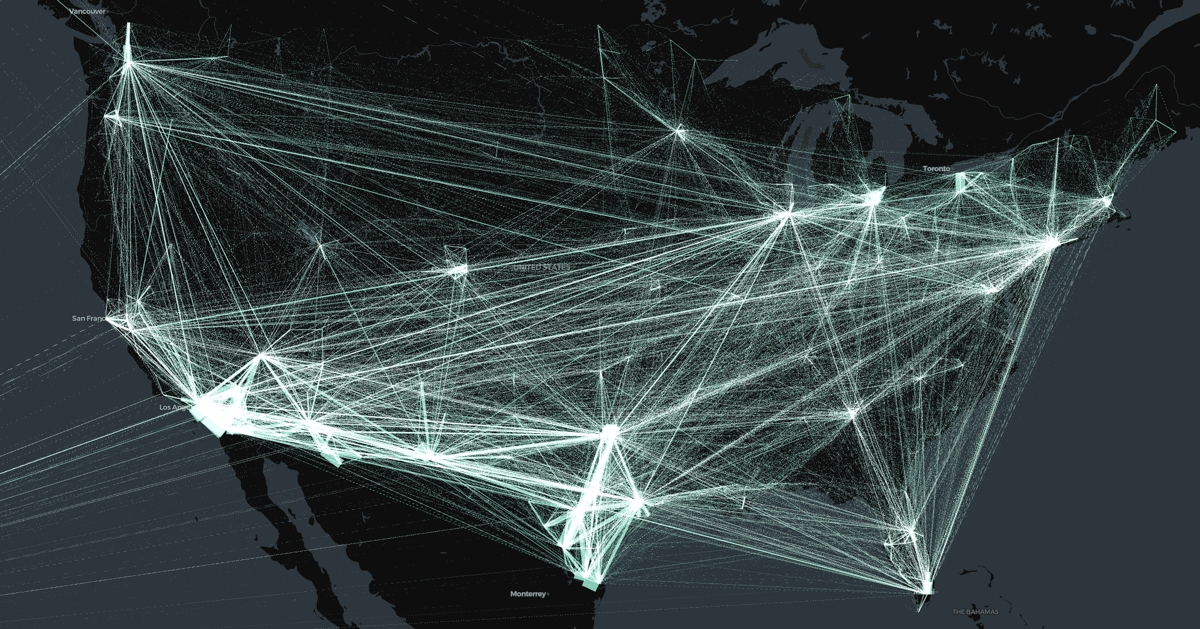
International visitors reach every corner of the United States, but their journeys converge on a handful of cities. These hubs—Los Angeles, Miami, New York, Las Vegas, and others—serve as the gateways through which international travel flows to destinations nationwide.
International Hotspots
To get a more complete picture, we mapped county-by-county international visitor journeys across the country from 2024 and 2025. This surfaces regional behavioral trends and illustrates commonly used routes: where international visitors enter, whether they fly or drive, and what places are regularly combined on a single trip.
Travelers From Canada & Mexico
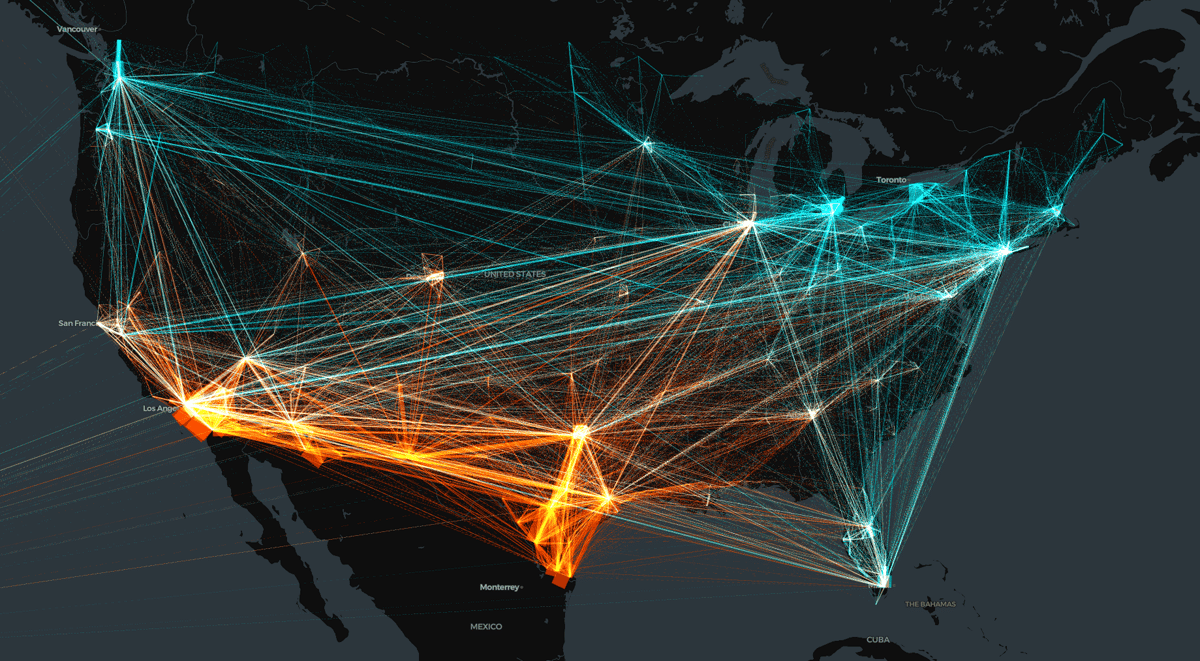
The most striking pattern: Canadian and Mexican travelers move differently than visitors from overseas. Their proximity to the US—and the variety of reasons they visit (leisure, business, family, conferences)—means they travel more widely and visit a greater diversity of places. The economic impact of these two markets spreads across destinations large and small in ways that travelers from Europe or Asia simply don't replicate.
Overseas Travelers
For overseas travelers, itineraries become more focused—particularly around major gateway cities and the national parks of the Southwest.
Travelers From the United Kingdom
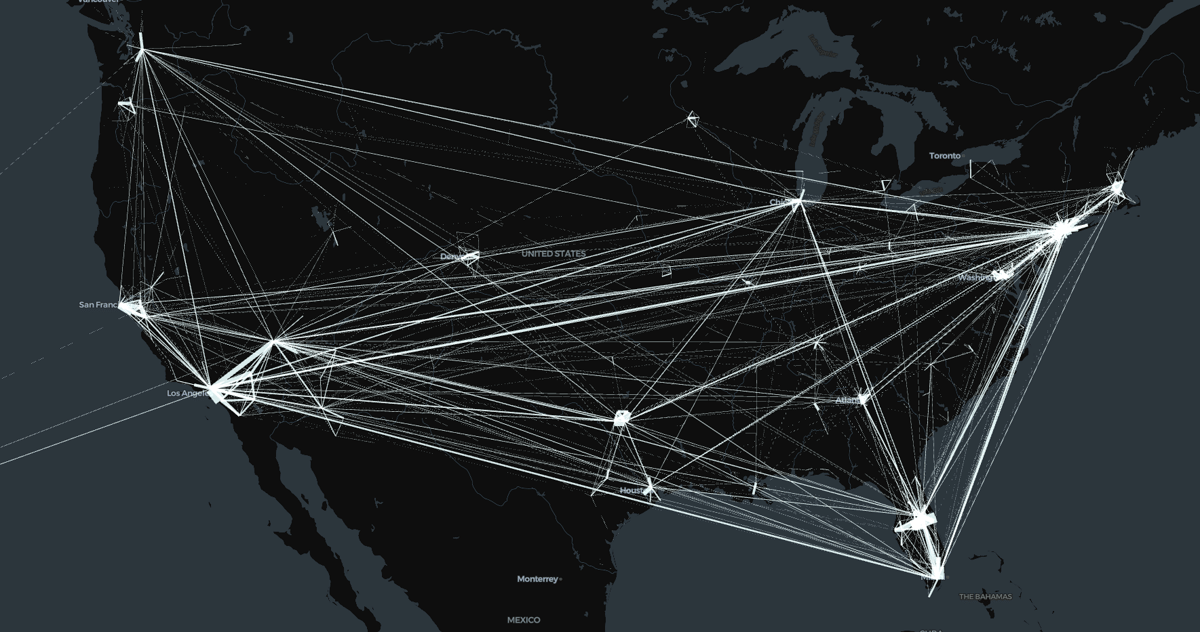
United Kingdom: A hub-and-spoke pattern anchored by Los Angeles, San Francisco, New York, Miami, and Orlando, with day trips to surrounding counties. Secondary hubs appear in Atlanta, Chicago, and Dallas.
Travelers From France & Germany
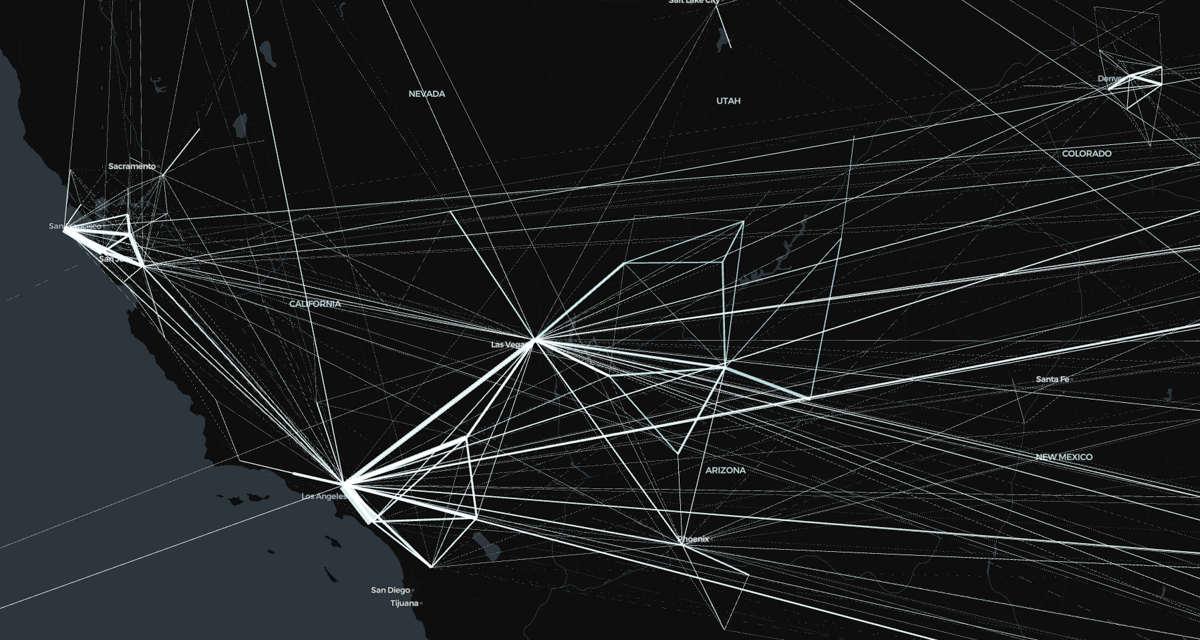
France & Germany: Strong affinity for the national parks of the Southwest, the California coast, Florida, and New York. These travelers are more likely to build road-trip itineraries connecting multiple parks.
Travelers From Japan & South Korea
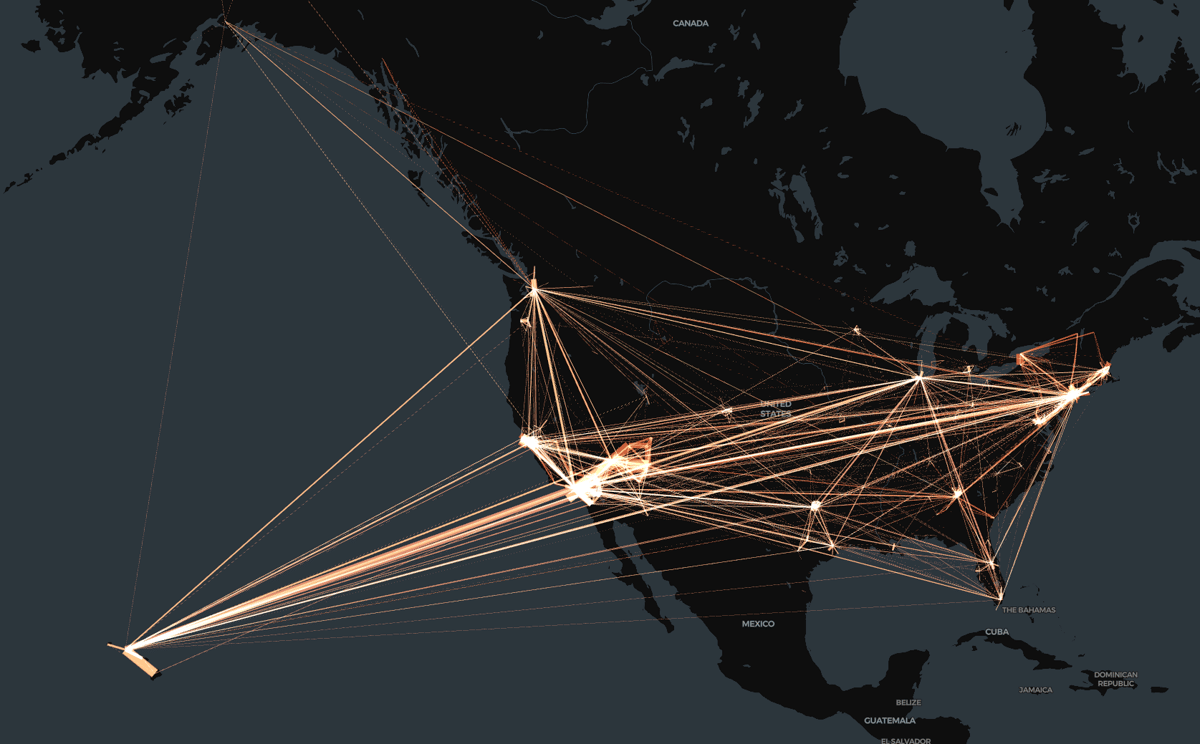
Japan & South Korea: A hybrid of tier-one urban destinations and national parks, with the notable inclusion of Hawaii as a focal point. These markets show tighter, more curated itineraries than European travelers.
Travelers From India
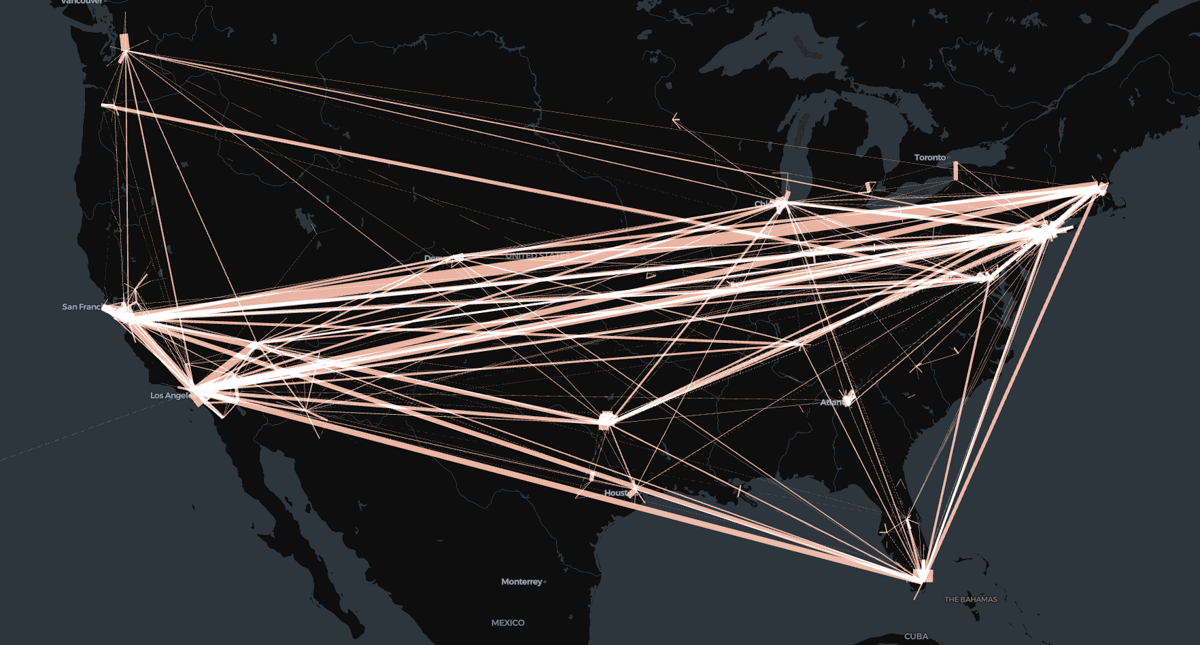
India: The pattern here is distinct—long point-to-point connections indicating air travel between major US cities rather than regional road trips. Business travel and family visits likely drive this pattern along with first-time trips to the US where hitting the “must-see” destinations guides the itinerary.
National Park Fee Increases: A Wildcard for 2026
The travel patterns above reveal just how essential national parks are to international itineraries—particularly for European and East Asian visitors. That makes the policy change coming in January 2026 worth watching closely.
The National Park Service is now charging international visitors ages 16 and up an additional $100 per person at eleven of the country's most iconic parks, including Yellowstone, Yosemite, Grand Canyon, and Zion. Alternatively, foreign travelers can purchase a $250 America the Beautiful Pass which provides entry for a single vehicle and will be the preferred option for independent travelers.
For commercial tours, like tour buses, the per-visitor fee increases are a thorny issue. Foreign travelers entering these parks through commercial services are subject to the $100 per visitor entrance fee and the requirement for validating residency is placed on the tour operator.
Since most foreign commercial tours are booked well in advance of the announcement of these fee increases, tour operators cannot simply pass along the new costs to travelers without potentially being in breach of contract with the traveler, which opens the door to cancellations. Nor can they absorb the costs of an additional $100 per person fee for a tour bus with 50 or more foreign travelers. We have heard of some operators cancelling their national parks trips entirely, though it remains to be seen whether or not this will be a widespread practice.
How To Position Your Destination for Success in 2026
Across Zartico’s portfolio of clients, the overarching strategy is to stay the course and maintain an international presence in a destination’s key markets. For some, this is through international reps, others are using PR and marketing. These destinations are taking the long view that opening a new international market takes time, patience and persistence to steadily grow destination awareness.
This is a sound strategy for states, tier one and tier two cities and national parks gateway communities. For smaller destinations, evaluating the risk-reward of this current moment in international travel is challenging. The more a destination with a smaller budget can lean into co-ops, regional partnerships and other collective activities, the less risk exposure a destination has to changes in the international travel landscape.
Jay Kinghorn is Chief Innovation Officer and Co-Founder at Zartico, where he helps destinations unlock the power of data to optimize marketing performance and communicate impact with clarity.
Stay ahead with Zartico’s Essential Intelligence. Curated insights at the intersection of data, marketing, and place-based strategy. No noise, just the intel you need to make smarter decisions. Sign up here for our quarterly newsletter.